
The allure of the Roman Empire has never truly dimmed. Despite its fall over 1,500 years ago, this ancient civilization remains an eternal point of interest. Google’s recent article on the intriguing question “Why do men think about the Roman Empire?” brings this topic back into the limelight. Drawing from existing public literature, this blog post delves deep into the reasons behind modern man’s fascination with this ancient empire.
1. Legacy of Greatness and Power
One of the primary attractions of the Roman Empire is its legacy of unparalleled power and influence. For men, who often grow up with narratives of achieving greatness, the story of the Roman Empire offers a playbook. From its conquests to its vast territories, Rome embodies the ideals of strength, influence, and leadership. Reflecting on the empire becomes an introspective exercise for many in pondering their own aspirations.
2. Cultural Imprints
Hollywood and popular literature have played significant roles in perpetuating the allure of Rome. From epics like Gladiator to TV series like Rome, the grandeur and drama of the Roman world are re-enacted, embedding the Roman narrative into modern culture. Such portrayals subtly weave Roman ideals into the psyche, particularly of men who might see themselves in the heroes and anti-heroes of these tales.
3. Lessons in Governance and Politics
The political landscape of Rome, filled with its Senate deliberations, conspiracies, and groundbreaking reforms, offers a rich tapestry of lessons. Modern politics often mirrors some of these historical scenarios, making the Roman Empire a case study for those interested in governance, political maneuvering, and leadership strategies.
4. Seeking Identity and Belonging
The Roman Empire was a melting pot of cultures, from the Gauls in the West to the Parthians in the East. This amalgamation can resonate with many men today who grapple with questions of identity and cultural belonging in an increasingly globalized world. The Roman story, therefore, offers a lens to understand unity in diversity.
5. Military Strategy and Innovation
Rome’s military strategies, formations, and innovations remain a point of study for many enthusiasts and professionals. The precision of the Roman legions, the fortification techniques, and the pioneering use of engineering in warfare are topics of admiration. For men who are inclined towards strategic thinking, military history, or even gaming, Rome provides a wealth of knowledge.
6. A Mirror to Contemporary Societies
Finally, the decline of the Roman Empire offers a cautionary tale. Amidst the luxury, advancements, and power, were societal fractures, economic disparities, and external pressures. Men, as stakeholders in the current societal construct, may reflect upon Rome to glean insights about sustainability, resilience, and adaptation.
Conclusion
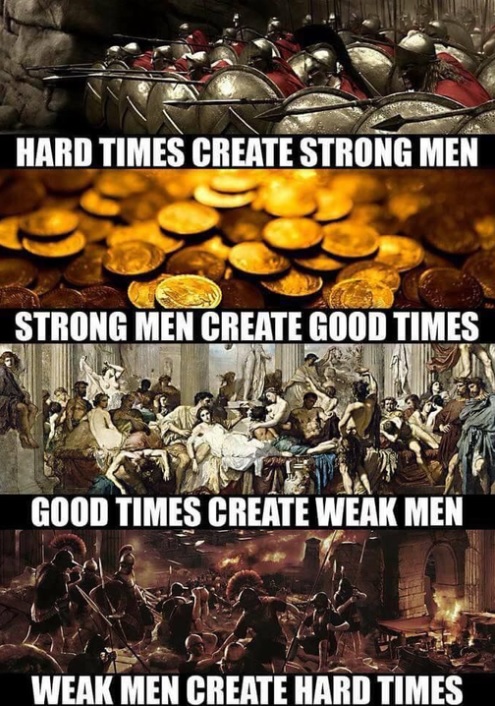
The Roman Empire, with its vast legacy, becomes more than just an historical entity. It morphs into an archetype, a metaphor, and a mirror. For men, thinking about Rome could be an exploration of self, aspirations, and the broader world. As new articles and studies, like Google’s, continue to probe this fascination, one thing remains clear: the Roman Empire will continue to captivate the minds of many for generations to come. As far as how American’s view the Roman Empire, more and more keep referring to the following visual representation.
 Remi Tribe