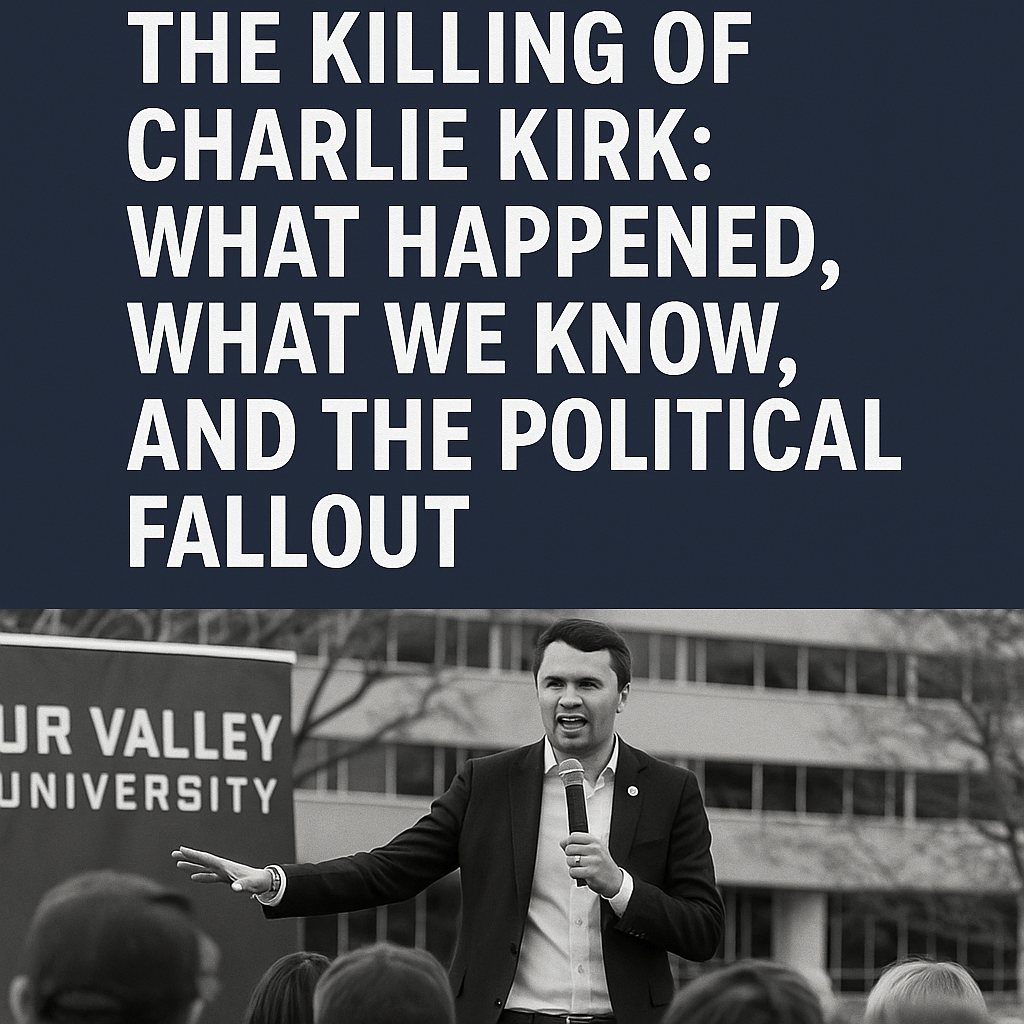
On September 10, 2025, Charlie Kirk, the conservative activist and founder of Turning Point USA, was shot dead while speaking outdoors at a campus event at Utah Valley University in Orem, Utah.
What Is Known
Here are the confirmed facts and details as of now:
- Kirk was speaking as part of his “American Comeback Tour” when a shooter fired from a rooftop nearby.
- The weapon involved was a Mauser rifle.
- A suspect, 22‑year‑old Tyler Robinson, has been arrested.
- Robinson is not a student at UVU. He was enrolled at a technical college and had earlier attended Utah State University.
- Reports indicate Robinson had expressed political views that were increasingly extreme, with some statements showing “early leftist leanings,” contrasted with a conservative family background.
- Evidence being used in the investigation includes surveillance video, Discord messages, and inscriptions on the rifle.
What Is Not Known (Yet or Clearly)
- The definitive motive behind the killing has not been established. While there are reports Robinson had been increasingly political, investigators have not confirmed whether his politics were the primary cause.
- Whether the shooting was planned as a political assassination, or whether other factors (mental health, personal issues, etc.) played a more substantial role.
- Full details of what Robinson’s messages said, what his ideological affiliations or influences were in recent months, and how much those factored into planning or instigating the crime.
How the Conversation Turned Toward Debates About Ideology
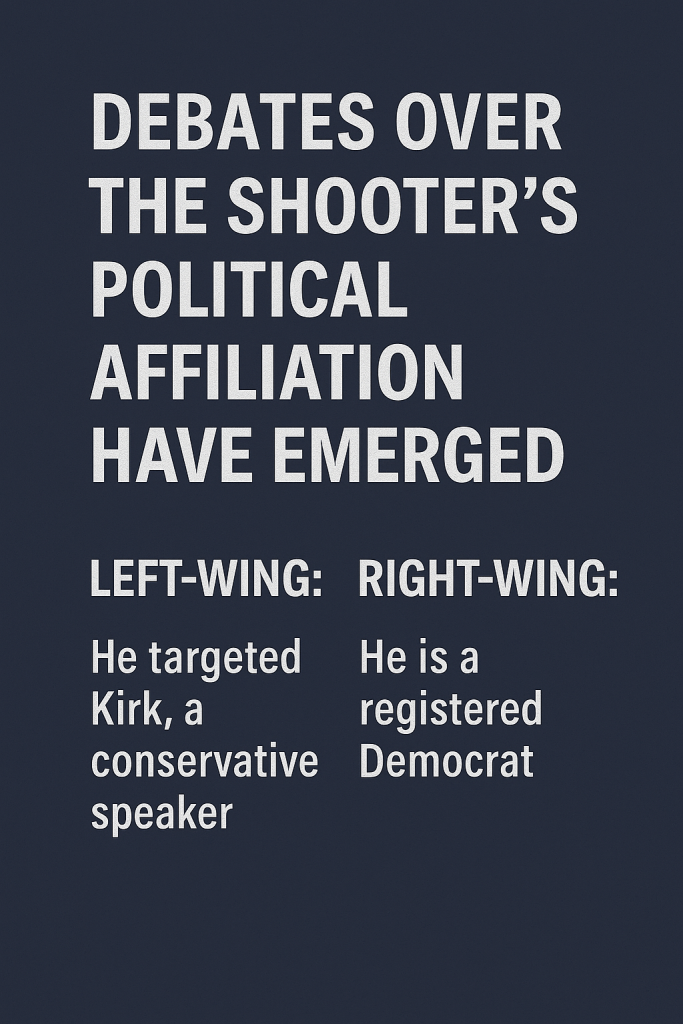
Since news of Kirk’s death broke, many public figures, media outlets, and social media users have zoomed in on whether the shooter was motivated by left‑wing ideas, right‑wing ideas, or something else. The debates have had several dimensions:
1. Immediate Assignation of Blame
- Before motive was confirmed, many conservative commentators and MAGA‑aligned voices blamed what they call the “radical left” or “leftist extremism,” suggesting that heated left‑wing rhetoric had helped incite the killing. Donald Trump and others have explicitly blamed the left without waiting for the full investigation.
- On the other hand, some people on the left have highlighted Kirk’s own controversial statements and rhetoric around guns, free speech, and culture, raising questions about whether the climate of political polarization and provocation contributed to the environment in which violence becomes more likely.
2. Media, Social Media, and Meme Culture
- Once the suspect’s political leanings started to emerge in public reporting (e.g. “early leftist leanings”), people on different sides interpreted and amplified those details in line with their existing beliefs.
- Social media has had a major role: rapid speculation, memes, denunciations, and counter‑claims. Some legitimate reporting, but also a lot of rumors and hostile exaggeration.
3. Rhetoric & Political Violence: Broader Context
- Kirk’s death is being used by many on the right to argue that political violence is accelerating and that left‑wing rhetoric (including from progressive activists or media) is to blame. This feeds into a narrative of “us vs them” and claims that “debate is over.”
- Conversely, others are warning that these rapid attributions may themselves escalate tensions and risk more violence if political identity becomes a trigger for retaliation.
Why the Left vs Right Debate Is Complicated
Here are some reasons why this debate is messy, and why conclusions now are tentative or risky:
- Overlap & Ambiguity in Beliefs: Having “leftist leanings” at some point does not necessarily mean the suspect’s actions were politically motivated in the way people imagine. Individuals’ ideological journeys are complex.
- Rhetoric vs. Action: Political speech (on left or right) can be provocative, inflammatory, or hateful, but legally, ethically, and causally distinguishing between harmful rhetoric and direct incitement is difficult.
- Mental Health, Personal Motivation, Other Factors: These often get overshadowed when political affiliation frames the whole narrative. Yet, motive in violent acts is almost always multifactorial.
- Media Incentives and Polarization: There’s a feedback loop: media outlets and opinion influencers (on all sides) benefit from framing an event in ways that align with their audience’s worldview. Rapid attribution (even without full evidence) gains clicks, viewers, engagement.
What This Means Going Forward
- We’ll need to wait for the full legal record, trial, or charges to see what the evidence shows about intent.
- Meanwhile, the debate itself—over how much political rhetoric contributes to violence—is likely to intensify. The question isn’t just “who did this” but “how did we get here.”
- There’s potential danger: if people believe reflexively that “the other side” is responsible, this can deepen divisions, reduce possibility of dialogue, and may even motivate more hostility.
Takeaways
- The shooting of Charlie Kirk is a tragedy with acknowledged political elements, but the complete picture isn’t yet known.
- Initial reports suggest left‑leaning ideologies may be part of the suspect’s background, but whether those were causal is unclear.
- Public discussion has quickly polarized: many conservatives attribute blame to “the radical left,” while some on the left point to Kirk’s rhetoric and broader social climate.
- This event reflects larger patterns in U.S. politics — increasing polarization, fears of political violence, and contested narratives about responsibility and incitement.
 Remi Tribe